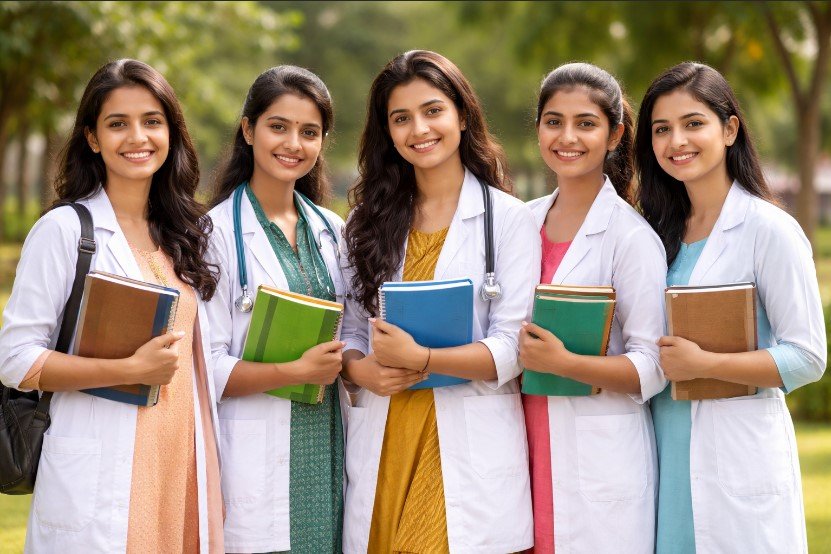
Introduction to BPT
Bachelor of Physiotherapy (BPT) is an undergraduate degree program designed to train students in the field of physical therapy and rehabilitation. Physiotherapy plays a vital role in restoring, maintaining, and enhancing physical function and mobility in patients suffering from injuries, illnesses, or disabilities.
With advancements in medical science and an increasing focus on preventive and rehabilitative care, BPT has become a popular and promising career option for students passionate about healthcare, wellness, and helping patients regain their quality of life.
Why Choose BPT?
- Growing Demand: Rising awareness about physical fitness, rehabilitation after surgeries, and sports-related injuries has increased the need for qualified physiotherapists.
- Diverse Career Opportunities: Graduates can work in hospitals, sports academies, wellness centers, research institutions, or even pursue higher studies like MPT.
- Holistic Development: The course combines practical clinical training with theoretical knowledge, emphasizing evidence-based treatment.
- Impactful Profession: Physiotherapists directly improve patients’ mobility, independence, and overall well-being, making it a socially rewarding career.
BPT Course Overview
The Bachelor of Physiotherapy is generally a 4.5-year program that includes 3.5 years of academic study and 1-year compulsory internship in hospitals or rehabilitation centers. The course integrates subjects from anatomy, physiology, exercise therapy, and modern rehabilitation techniques.
Duration
- Total Duration: 4.5 years
- Academic Study: 3.5 years
- Internship/Clinical Training: 1 year
Course Structure
The BPT curriculum usually includes the following subjects:
- Human Anatomy and Physiology – Understanding the structure and function of the human body.
- Kinesiology & Biomechanics – Study of human movement and mechanical principles.
- Exercise Therapy – Designing exercises for recovery and strengthening.
- Electrotherapy – Use of electrical modalities for pain relief and rehabilitation.
- Neurology & Neurosciences – Understanding nervous system disorders and their management.
- Orthopedic Physiotherapy – Treatment of musculoskeletal injuries and conditions.
- Cardiopulmonary Physiotherapy – Rehabilitation for heart and lung patients.
- Community Physiotherapy – Public health, preventive care, and rural health outreach.
- Research Methodology – Introduction to scientific research, evidence-based practice, and data interpretation.
Internship
The 1-year internship exposes students to clinical practice in real-world healthcare settings, enabling them to:
- Diagnose and assess patient conditions.
- Plan and implement physiotherapy interventions.
- Work alongside doctors, surgeons, and rehabilitation specialists.
- Gain experience in specialized areas such as pediatrics, geriatrics, and sports physiotherapy.
Eligibility Criteria for BPT
To pursue a Bachelor of Physiotherapy, candidates must meet the following eligibility requirements:
- Educational Qualification: Completion of 10+2 (or equivalent) with Physics, Chemistry, and Biology.
- Minimum Marks: Usually 50% aggregate in PCB (45% for reserved categories).
- Age Limit: Most institutes accept candidates aged 17 years or above at the time of admission.
- Entrance Exams: Some colleges require NEET or state-level entrance exam scores.
Admission Process
The admission process for BPT generally involves the following steps:
- Application Submission: Candidates apply through the college/university portal or centralized admission system.
- Eligibility Verification: Academic documents and entrance exam scores are verified.
- Entrance Exam: Many reputed colleges require NEET (National Eligibility cum Entrance Test) or state-level exams.
- Counseling & Seat Allotment: Based on merit, candidates are allotted seats through counseling rounds.
- Final Admission: Candidates complete document submission, fee payment, and registration to secure admission.
Some colleges also offer direct admission through management quota or merit-based selection.
Scope of BPT
BPT opens up a wide range of career opportunities in the healthcare sector:
- Clinical Practice: Work in hospitals, rehabilitation centers, or private clinics.
- Sports Physiotherapy: Support athletes in recovery, injury prevention, and performance improvement.
- Geriatric Care: Provide physiotherapy services to elderly patients.
- Pediatrics: Help children with developmental delays or congenital conditions.
- Research & Academia: Pursue higher studies (MPT, PhD) and contribute to physiotherapy research.
- Corporate Wellness & Fitness: Work in gyms, wellness centers, and corporate health programs.
With the healthcare industry expanding rapidly, qualified physiotherapists are in high demand both in India and abroad.
Detailed BPT Syllabus
The BPT syllabus is designed to provide both theoretical knowledge and practical skills to effectively assess and treat patients. It is structured semester-wise over 7 semesters followed by a 1-year internship.
Semester-Wise Subjects Overview
1 & 2 Semester
- Anatomy & Physiology – In-depth study of body systems.
- Biochemistry – Understanding metabolic processes relevant to rehabilitation.
- Kinesiology & Biomechanics – Basics of human movement and mechanics.
- Electrotherapy Basics – Introduction to electrical modalities.
3 & 4 Semester
- Exercise Therapy & Therapeutic Techniques – Designing exercise protocols for recovery.
- Pathology & Microbiology – Diseases affecting movement and infection control.
- Orthopedic Physiotherapy – Management of fractures, joint injuries, and musculoskeletal disorders.
- Neurology & Neurosciences – Rehabilitation for neurological disorders like stroke, cerebral palsy, or spinal injuries.
5 & 6 Semester
- Cardiopulmonary Physiotherapy – Rehabilitation of heart and lung conditions.
- Pediatrics & Geriatrics Physiotherapy – Specialized care for children and elderly.
- Community Physiotherapy – Health awareness, preventive care, and rural healthcare.
- Research Methodology – Understanding research design, statistics, and evidence-based practice.
7th Semester
- Advanced Clinical Training – Hands-on practice in hospital settings.
- Specialized Physiotherapy Techniques – Sports physiotherapy, occupational physiotherapy, and manual therapy.
- Internship Preparation & Patient Management – Preparing for real-world clinical exposure.
Specializations in BPT
While BPT itself is a general physiotherapy degree, students can focus on specialized areas during postgraduate studies (MPT) or through short-term certifications:
- Orthopedic Physiotherapy – Focuses on musculoskeletal system and injuries.
- Neurological Physiotherapy – Treatment of neurological disorders.
- Cardiopulmonary Physiotherapy – Rehab for heart and lung patients.
- Pediatric Physiotherapy – Addressing developmental disorders in children.
- Sports Physiotherapy – Injury prevention, recovery, and performance enhancement for athletes.
- Geriatric Physiotherapy – Focused on elderly care and mobility improvement.
These specializations allow physiotherapists to pursue higher studies or niche clinical roles, enhancing career prospects.
Practical Training in BPT
Practical exposure is a cornerstone of physiotherapy education. BPT students undergo:
- Clinical Rotations: Students work in hospitals under supervision, treating patients with orthopedic, neurological, pediatric, and cardiopulmonary issues.
- Hands-on Therapy Sessions: Learning exercise therapy, manual therapy, electrotherapy, and rehabilitation techniques.
- Internship: A 1-year mandatory internship where students manage patients, create treatment plans, and understand hospital operations.
- Workshops & Seminars: Exposure to the latest physiotherapy technologies, research findings, and professional networking opportunities.
Practical training ensures that graduates are job-ready and confident in handling patients independently.
Top Colleges Offering BPT in India
Here’s a list of reputed colleges offering BPT:
| College Name | Location | Type/Affiliation | Course Duration |
|---|---|---|---|
| All India Institute of Medical Sciences (AIIMS) | New Delhi | Government | 4.5 Years + 1-year internship |
| Christian Medical College (CMC) | Vellore | Private | 4.5 Years + 1-year internship |
| Manipal College of Allied Health Sciences | Manipal, Karnataka | Private | 4.5 Years + 1-year internship |
| Jamia Hamdard University | New Delhi | Private | 4.5 Years + 1-year internship |
| King George’s Medical University | Lucknow | Government | 4.5 Years + 1-year internship |
These colleges are recognized by the University Grants Commission (UGC) and follow Indian Association of Physiotherapists (IAP) guidelines.
Skills Required for BPT Students
A successful physiotherapist needs a combination of technical, analytical, and interpersonal skills:
- Analytical Skills: Ability to assess patient conditions and design effective treatment plans.
- Physical Stamina: Conducting therapy sessions often requires physical effort.
- Communication Skills: Explaining exercises and motivating patients is critical.
- Empathy: Understanding patient challenges and providing emotional support.
- Research Orientation: Keeping up with new techniques, technologies, and evidence-based practices.
Career Scope after BPT
After completing BPT, graduates have multiple options:
- Clinical Practice: Join hospitals, rehabilitation centers, or start a private clinic.
- Sports & Fitness: Work with sports teams, gyms, and fitness centers.
- Healthcare Administration: Positions in hospital management and patient care coordination.
- Academics & Research: Pursue MPT, PhD, or teaching roles in physiotherapy colleges.
- Medical Tourism & Wellness Centers: International opportunities are growing, especially in countries like the USA, UK, Canada, and UAE.
The healthcare sector in India and abroad is expanding rapidly, making physiotherapy a high-demand, high-growth career.
Salary and Job Prospects After BPT
Salary after BPT varies depending on experience, specialization, and work setting.
- Entry-Level Physiotherapist: ₹15,000 – ₹30,000 per month in hospitals or clinics.
- Mid-Level Experience (3–5 years): ₹30,000 – ₹60,000 per month.
- Senior Physiotherapist / Specialist: ₹60,000 – ₹1,00,000+ per month, especially in private hospitals, sports teams, or corporate wellness centers.
- Private Practice / Clinic: Income can vary widely, often higher than salaried positions, depending on patient inflow and specialization.
Additional Benefits: Health insurance, travel allowances, research grants, and performance incentives in corporate or international setups.
Higher Studies Options After BPT
Graduates can enhance their qualifications and career opportunities through postgraduate and certification programs:
Master’s Programs (MPT)
- Orthopedic Physiotherapy
- Neurological Physiotherapy
- Cardiopulmonary Physiotherapy
- Sports Physiotherapy
- Pediatrics & Geriatrics Physiotherapy
Duration: 2 years
Institutes: AIIMS, CMC Vellore, Manipal University, Jamia Hamdard University
Other Options
- Ph.D. in Physiotherapy: Research-oriented career in academics or hospitals.
- Certifications & Short Courses: Specialized workshops in manual therapy, occupational physiotherapy, or neuro-rehabilitation.
Higher studies increase expertise, employability, and salary potential, especially for teaching, research, or specialized clinical roles.
Global Opportunities for Physiotherapists
Physiotherapy is a globally recognized profession, allowing graduates to work abroad:
- Countries in Demand: USA, UK, Canada, Australia, UAE, New Zealand
- Requirements:
- Licensing exams (e.g., NCLEX for the USA, MCPT for the UK)
- Credential evaluation and work visas
- Roles Abroad: Clinical physiotherapist, sports physiotherapist, rehabilitation specialist, research associate
Global exposure enhances skills, career growth, and earning potential.
Challenges in the Physiotherapy Profession
While rewarding, a career in physiotherapy comes with challenges:
- High Physical Demand: Long hours and hands-on treatment can be physically taxing.
- Continuous Learning: Rapid advancements in treatment techniques require ongoing training.
- Patient Compliance: Success depends on patient cooperation and adherence to therapy.
- Competition: Growing number of graduates makes specialization important for better opportunities.
Despite these challenges, the profession is highly rewarding, both financially and socially.
Future Trends in Physiotherapy
The field of physiotherapy is evolving with technology, research, and public health trends:
- Tele-Physiotherapy: Remote consultations using digital platforms.
- Robotics & AI in Rehabilitation: Advanced devices for movement therapy.
- Sports & Fitness Integration: Collaboration with gyms, athletic training, and wellness programs.
- Preventive Healthcare: Increased focus on postural correction, ergonomics, and community physiotherapy.
- Research & Evidence-Based Practice: Growing emphasis on clinical studies and advanced treatment protocols.
These trends create new career avenues and opportunities for innovation.
Conclusion
Bachelor of Physiotherapy (BPT) is a dynamic and rewarding healthcare program that equips students with the skills to improve patient mobility, recovery, and overall well-being.
From clinical practice to sports physiotherapy, research, and global opportunities, BPT graduates have a wide spectrum of career paths. With increasing healthcare awareness and technological advancements, the demand for physiotherapists is rising steadily, making BPT a promising career choice for students passionate about healthcare and rehabilitation.
FAQs:
BPT is typically 4.5 years, including 3.5 years of academics and 1-year compulsory internship.
Candidates must have completed 10+2 with Physics, Chemistry, and Biology, with at least 50% marks (45% for reserved categories)
Yes, it offers diverse opportunities in hospitals, sports, research, wellness centers, and abroad. It is financially and socially rewarding.
Yes, graduates can pursue MPT, Ph.D., or certifications in specialized physiotherapy areas.
Entry-level salary is around ₹15,000 – ₹30,000/month, increasing with experience and specialization.