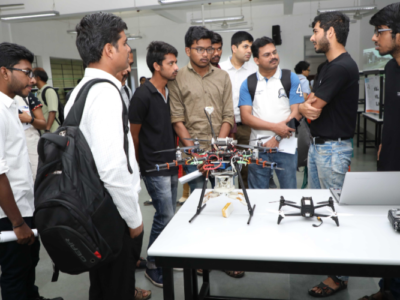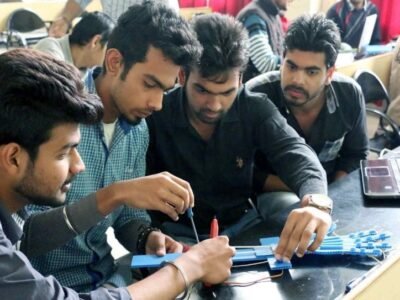
Coimbatore Institute of Technology, Coimbatore, Tamil Nadu
College Type: Autonomous
Total Tuition Fees: Rs. 5 L – 10 L
Courses Offered: 3 Courses
Exams Accepted: 3 Exams

Technology infrastructure is the backbone of modern organizations. Businesses of every size rely on networks, databases, servers, cloud systems, and digital tools to operate efficiently. Ensuring that all of this technology works smoothly is the responsibility of IT support professionals. For students interested in technical troubleshooting, system maintenance, and enterprise technology operations, a Diploma in Information Technology offers a strong pathway into this field.
This diploma equips learners with practical knowledge of IT systems, networking, databases, hardware, software, and troubleshooting methodologies. It prepares graduates for entry-level technical support and infrastructure roles across industries. For those aiming to become IT Support Specialists, the program provides the technical and professional foundation needed to begin building a long-term career in information technology.
As businesses continue expanding their digital infrastructure, demand for skilled IT support professionals remains strong. Diploma holders who develop solid technical capabilities and problem-solving skills can access opportunities in IT departments, managed service providers, software companies, healthcare, finance, education, and government sectors.
A Diploma in Information Technology is a technical education program focused on computer systems, networking, databases, software tools, and IT infrastructure management. The program is typically designed to develop practical, job-ready skills for roles involving technical support, system administration assistance, network maintenance, and helpdesk operations.
show more| Feature | Details |
|---|---|
| Course Name | Diploma in Information Technology |
| Duration | 3 Years |
| Eligibility | 10th Pass / Equivalent |
| Admission Process | Merit-Based / Entrance-Based |
| Course Type | Diploma |
| Average Fees | ₹20,000 – ₹1,50,000 per year |
| Career Scope | IT Support, Networking, System Administration |
| Top Job Roles | IT Support Technician, Helpdesk Analyst, Network Support Executive |
This diploma balances technical theory with practical lab-based training to prepare students for real-world IT environments.
Students who enjoy working with technology systems and solving technical problems often find this diploma highly rewarding.
Every organization requires IT support for systems, devices, and infrastructure.
The curriculum focuses on applied learning rather than purely theoretical concepts.
Graduates can begin working immediately after diploma completion.
IT support can lead into networking, cybersecurity, cloud administration, and systems engineering.
The curriculum is designed around the technologies commonly used in business IT environments.
Networking knowledge is essential for IT support professionals.
Students learn:
These topics help students understand how devices communicate and how networks are maintained.
Databases support nearly every modern application.
Topics include:
IT support professionals often assist with database-related troubleshooting and maintenance.
Understanding operating systems is critical for support roles.
Students learn:
This knowledge helps support staff resolve workstation and server issues.
IT professionals must understand physical computer systems.
Covered areas include:
Hardware support remains a key part of many IT roles.
Security awareness is increasingly important in support environments.
Topics may include:
Security-minded support staff are highly valued by employers.
A successful IT support specialist combines technical expertise with interpersonal effectiveness.
Support professionals diagnose and solve issues efficiently.
They explain technical issues to non-technical users.
Support often involves helping frustrated users.
Minor configuration errors can cause major issues.
Technology environments change constantly.
The diploma mirrors real-world IT support responsibilities through practical training.
Students diagnose hardware and software issues.
Labs teach network setup and problem resolution.
Learners manage and query data systems.
Students configure users, permissions, and services.
Some institutions simulate ticket-based support workflows.
Graduates entering IT support roles commonly handle:
These responsibilities provide broad exposure to enterprise IT environments.
IT support professionals are needed in nearly every sector.
Internal IT departments support staff and infrastructure.
Managed service companies support multiple clients.
Hospitals and clinics maintain digital systems and devices.
Schools and colleges require IT support teams.
Banks depend heavily on secure IT systems.
Public departments manage extensive digital infrastructure.
Compensation varies based on skills, certifications, and employer.
| Employer Type | Average Starting Salary |
|---|---|
| Small Businesses | ₹2 – ₹3.5 LPA |
| Mid-Size Firms | ₹3 – ₹5 LPA |
| Enterprise Organizations | ₹4 – ₹7 LPA |
| Specialized IT Providers | ₹5 – ₹8 LPA |
Certifications and technical specialization can improve salary prospects.
Industry certifications strengthen employability.
Popular beginner certifications include:
Employers often value certification-backed practical knowledge.
IT support is a strong starting point for many advanced tech careers.
Possible future paths include:
The broad foundation makes career transitions easier.
A Diploma in Information Technology provides the academic framework for an IT support career, but true readiness comes from applying that knowledge in practical environments. Students who actively build hands-on skills during their diploma become stronger candidates for technical support, helpdesk, and infrastructure roles after graduation.
IT support is a practical profession. Employers expect entry-level hires to understand not just theory, but also how to diagnose, configure, and maintain real systems. Developing technical confidence during the diploma can significantly improve placement opportunities and workplace performance.
Networking is one of the most important pillars of IT support.
Most technical issues involve connectivity, access, or communication between systems. Support professionals regularly troubleshoot network-related problems.
Strong networking knowledge is essential for support and infrastructure roles.
IT support teams work extensively with operating systems.
Students should learn:
Growing importance in enterprise IT makes Linux useful for support roles.
Important Linux skills include:
While support professionals may not design databases, understanding them helps in application troubleshooting.
Database familiarity is particularly useful in enterprise application support.
Modern IT support operates through structured support workflows.
Students should understand platforms such as:
These processes are central to professional IT support environments.
Successful support professionals follow structured troubleshooting approaches.
| Step | Description |
|---|---|
| Identify Problem | Understand issue clearly |
| Gather Information | Check symptoms and logs |
| Form Hypothesis | Predict likely cause |
| Test Solution | Apply fix safely |
| Verify Resolution | Confirm issue solved |
| Document Outcome | Record for future reference |
Structured troubleshooting improves speed and consistency.
IT support is both technical and people-focused.
Support professionals work directly with users who may:
Strong interpersonal skills can significantly improve career growth.
Hands-on experience is critical during the diploma.
Lab practice develops confidence beyond classroom theory.
Internships provide real-world experience before graduation.
Even short internships can add significant resume value.
Graduates may start in several related positions.
Handles user issues and first-line support.
Maintains workstations, peripherals, and local systems.
Provides software and hardware troubleshooting.
Assists with connectivity and infrastructure maintenance.
Supports software applications and enterprise tools.
These roles build foundational experience for future specialization.
Certifications complement diploma education and improve job prospects.
| Certification | Focus Area |
|---|---|
| CompTIA A+ | Hardware and IT fundamentals |
| CompTIA Network+ | Networking basics |
| Cisco CCNA | Network administration |
| Microsoft Fundamentals | Microsoft ecosystem |
| ITIL Foundation | IT service management |
Certifications demonstrate validated practical knowledge.
Every IT support professional faces challenges early on.
Experience and structured learning reduce these challenges over time.
Students should highlight practical experience, not just coursework.
Recruiters prefer evidence of hands-on capability.
Starting in IT support after completing a Diploma in Information Technology can lead to a wide range of long-term technology careers. IT support professionals gain broad exposure to systems, networks, infrastructure, software, and user environments, making the role one of the best entry points into the wider IT industry.
As technical knowledge and experience increase, professionals can move into specialized, higher-paying, and more strategic positions across infrastructure, networking, cloud, security, and management.
Most professionals advance gradually through technical and leadership roles.
| Experience | Common Role | Key Responsibilities |
|---|---|---|
| 0–2 Years | IT Support Technician | Basic troubleshooting, ticket handling |
| 2–4 Years | Desktop Support Engineer | Advanced endpoint/system support |
| 4–6 Years | System Administrator | Server and infrastructure management |
| 6–8 Years | Network / Cloud Administrator | Specialized infrastructure support |
| 8+ Years | IT Manager / Infrastructure Lead | Team and strategy leadership |
Career speed depends on certifications, performance, and upskilling.
IT support builds transferable technical knowledge useful for specialization.
Focuses on enterprise networking and connectivity.
Key skills:
Manages servers and enterprise systems.
Responsibilities include:
Cloud expertise is increasingly valuable.
Popular platforms:
Security-conscious support staff often transition well into cybersecurity.
Possible roles:
Combines technical and operational leadership.
Includes:
IT support can lead to strong salary progression.
| Career Stage | Average Salary Range |
|---|---|
| Entry-Level IT Support | ₹2 – ₹8 LPA |
| Mid-Level Support / Admin | ₹6 – ₹15 LPA |
| Specialized Engineer | ₹10 – ₹25 LPA |
| Infrastructure / Cloud Lead | ₹20 – ₹40 LPA |
| IT Manager / Director | ₹30 LPA+ |
Specialized certifications can accelerate growth significantly.
Technology infrastructure changes rapidly.
Professionals who continue learning remain competitive and adaptable.
Routine support tasks are increasingly automated.
Complex troubleshooting, user communication, escalation, and infrastructure planning still require skilled professionals.
IT support roles are evolving—not disappearing.
Career advancement depends heavily on demonstrated expertise.
Employers value proactive professionals who contribute beyond tickets.
Many IT support roles now support remote or hybrid work models.
Remote-friendly positions include:
Cloud-based infrastructure has expanded remote support opportunities globally.
Experienced professionals may pursue independent business ventures.
Support expertise can translate into service-based entrepreneurship.
Growth in IT comes with challenges.
Strong time management and learning discipline help overcome these issues.
For students interested in infrastructure, troubleshooting, systems, and networking, a Diploma in Information Technology can be an excellent career investment.
When paired with certifications and hands-on practice, the diploma can provide outstanding value.
A Diploma in Information Technology offers a practical and structured route into IT support and infrastructure careers. By teaching networking, databases, operating systems, hardware support, and troubleshooting methodologies, the program prepares students for the technical realities of modern support environments.
More importantly, IT support is not a dead-end role—it is a foundational platform for growth into networking, systems administration, cloud computing, cybersecurity, and IT leadership. Students who combine their diploma with certifications, internships, and ongoing skill development can build rewarding, future-ready careers across the technology sector.
For those who enjoy solving technical problems and working with systems that keep organizations running, IT support offers a stable and evolving career path with strong long-term potential.
Yes, it is one of the most relevant qualifications for starting in IT support, helpdesk, and technical support roles.
Common roles include IT Support Technician, Helpdesk Analyst, Desktop Support Engineer, and Network Support Associate.
Not mandatory, but certifications significantly improve employability and career growth.
Yes, many professionals transition from IT support into cloud, networking, and cybersecurity roles.
Yes, especially when used as a stepping stone into specialized IT domains.