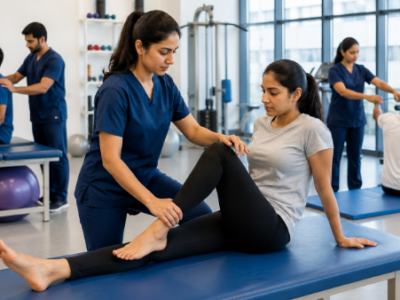
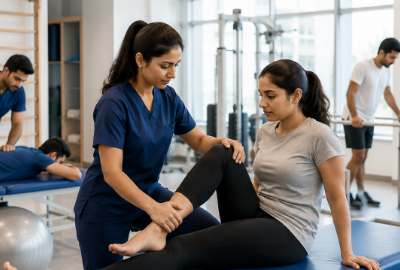
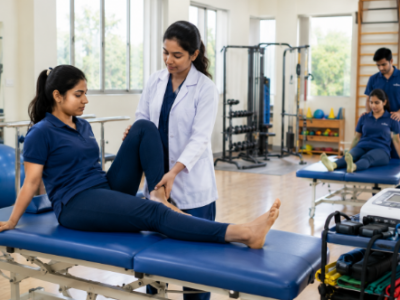
A PhD in Physiotherapy is the highest academic qualification in the field of physiotherapy. It is designed for professionals who want to advance their expertise in research, clinical innovation, teaching, and evidence-based rehabilitation science.
Unlike undergraduate and postgraduate programs that focus mainly on clinical practice, a PhD in Physiotherapy is centered on original research, scientific discovery, and advanced clinical problem-solving.
This program is ideal for physiotherapists who want to contribute to:
- Medical research and innovation
- Academic teaching at universities
- Advanced clinical protocols
- Healthcare policy and development
- Evidence-based rehabilitation techniques
What is PhD in Physiotherapy?
PhD in Physiotherapy is a doctoral-level research degree that focuses on generating new knowledge in the field of physical therapy and rehabilitation sciences.
It involves:
- Independent research work
- Dissertation/thesis submission
- Publication of research papers
- Advanced study of rehabilitation science
- Clinical or experimental research
Students work closely with research supervisors and contribute to solving real-world healthcare problems.
Why Choose PhD in Physiotherapy?
Choosing a PhD in Physiotherapy offers several academic and professional benefits.
Highest Academic Qualification
It is the top-level degree in physiotherapy education.
Research and Innovation Opportunities
You contribute to developing new treatment methods and rehabilitation techniques.
Academic Career Growth
PhD is essential for:
- Professorship roles
- University teaching positions
- Academic leadership
Contribution to Healthcare Development
Your research can improve patient care and treatment outcomes.
Global Recognition
A PhD enhances opportunities for international research collaborations
show moreCourse Overview
| Feature | Details |
|---|---|
| Course Name | PhD in Physiotherapy |
| Course Level | Doctorate (PhD) |
| Duration | 3–6 Years (varies) |
| Eligibility | MPT / Master’s in Physiotherapy |
| Admission Process | Entrance Exam + Interview |
| Course Type | Research-based |
| Output | Thesis + Publications |
| Career Roles | Researcher, Professor, Consultant |
Eligibility Criteria for PhD in Physiotherapy
Students must meet strict academic requirements.
Academic Qualification
- Must have completed Master of Physiotherapy (MPT)
- Minimum marks: 55%–60% (varies by university)
Entrance Requirements
Most universities require:
- PhD entrance exam
- Research proposal submission
- Personal interview
Additional Requirements
Some institutions may require:
- Research experience
- Published papers (preferred)
Admission Process
Admission to PhD in Physiotherapy is competitive and research-focused.
Step 1: Entrance Exam
Candidates must qualify for university-level PhD entrance tests.
Step 2: Research Proposal
Students must submit a detailed research topic proposal.
Step 3: Interview Round
Shortlisted candidates are interviewed by research panels.
Step 4: Final Selection
Based on:
- Entrance score
- Research proposal quality
- Academic background
PhD Specialization Areas in Physiotherapy
PhD candidates usually select a focused research domain.
| Specialization | Description | Research Focus |
|---|---|---|
| Neurological Rehabilitation | Brain and nerve disorders | Stroke, spinal injury recovery |
| Orthopedic Physiotherapy | Musculoskeletal system | Joint disorders, pain management |
| Sports Rehabilitation | Athletic performance | Injury prevention, recovery |
| Cardiopulmonary Physiotherapy | Heart and lung health | ICU rehabilitation |
| Pediatric Physiotherapy | Child development disorders | Motor skill development |
| Geriatric Physiotherapy | Elderly care | Age-related mobility issues |
| Community Rehabilitation | Public health | Rural rehabilitation programs |
Research Areas in PhD Physiotherapy
PhD students work on advanced research topics such as:
- Pain management techniques
- Neuroplasticity and recovery
- Biomechanics of movement
- Exercise physiology
- Robotics in rehabilitation
- AI-based physiotherapy systems
- Post-surgical recovery methods
Structure of PhD in Physiotherapy
The PhD program generally includes:
Coursework Phase
- Research methodology
- Biostatistics
- Advanced physiotherapy concepts
- Academic writing
Research Phase
- Selection of research topic
- Data collection
- Clinical trials or experiments
- Data analysis
Thesis Submission
- Final dissertation
- Viva voce (oral defense)
Skills Required for PhD in Physiotherapy
To succeed in doctoral studies, students must develop advanced skills.
Research Skills
Ability to design and conduct scientific studies.
Analytical Thinking
Interpreting complex medical data.
Writing Skills
Publishing research papers in journals.
Clinical Knowledge
Strong understanding of physiotherapy practices.
Critical Thinking
Evaluating and improving treatment methods.
Top Institutes Offering PhD in Physiotherapy
Some reputed institutions include:
- AIIMS (All India Institute of Medical Sciences)
- Manipal Academy of Higher Education
- Jamia Hamdard University
- SRM Institute of Science and Technology
- Leading state medical universities
Fee Structure
The fee depends on university type.
| Institution Type | Average Fees |
|---|---|
| Government University | ₹50,000 – ₹2,00,000 per year |
| Private University | ₹1,00,000 – ₹4,00,000 per year |
Career Opportunities After PhD in Physiotherapy
PhD holders have elite career options.
- University Professor
- Research Scientist
- Clinical Research Specialist
- Healthcare Consultant
- Rehabilitation Director
Employment Areas
- Universities and colleges
- Research institutes
- Hospitals
- Government health organizations
- International healthcare bodies
Salary After PhD in Physiotherapy
| Role | Average Salary |
|---|---|
| Assistant Professor | ₹6 – ₹10 LPA |
| Senior Researcher | ₹8 – ₹15 LPA |
| Clinical Scientist | ₹10 – ₹18 LPA |
| Professor | ₹12 – ₹25 LPA |
Future Scope of PhD in Physiotherapy
The field is expanding due to:
- Advanced medical research
- Technology in rehabilitation
- Aging population
- Chronic disease management
Advanced Career Roles After PhD in Physiotherapy
PhD holders move beyond clinical practice into research-driven and academic leadership roles.
University Professor
One of the most respected career paths after PhD.
Responsibilities:
- Teaching postgraduate physiotherapy students
- Designing academic curriculum
- Supervising research scholars
- Publishing scientific papers
Workplaces:
- Universities
- Medical colleges
- Research institutions
Research Scientist in Physiotherapy
This role focuses on innovation and scientific development.
Responsibilities:
- Conducting clinical and experimental research
- Developing new rehabilitation techniques
- Studying movement disorders and recovery methods
- Publishing research in international journals
Clinical Research Specialist
A blend of clinical practice and research.
Responsibilities:
- Running clinical trials
- Testing new physiotherapy techniques
- Analyzing patient recovery data
- Working with hospitals and pharma companies
Rehabilitation Director
A senior leadership position in healthcare institutions.
Responsibilities:
- Managing physiotherapy departments
- Designing rehabilitation programs
- Supervising senior therapists
- Implementing hospital protocols
Healthcare Consultant
PhD graduates can work as expert consultants.
Responsibilities:
- Advising hospitals and clinics
- Designing rehab systems
- Improving patient care strategies
Policy Advisor in Healthcare
PhD holders may contribute to government and healthcare policy.
Responsibilities:
- Developing rehabilitation policies
- Advising public health departments
- Improving healthcare systems
Career Growth Path After PhD in Physiotherapy
| Level | Role | Experience |
|---|---|---|
| Entry Academic Level | Assistant Professor | 0–3 Years |
| Mid-Level | Associate Professor | 3–7 Years |
| Senior Level | Professor / Research Head | 7–12 Years |
| Expert Level | Dean / Director / Research Chair | 12+ Years |
Research Opportunities After PhD
PhD in Physiotherapy opens global research pathways.
Clinical Research Areas
- Neuro rehabilitation advancements
- Sports injury recovery systems
- Pain management techniques
- Post-operative rehabilitation protocols
Technology-Based Research
- Robotics in physiotherapy
- AI-assisted rehabilitation
- Virtual reality therapy systems
- Wearable movement trackers
Public Health Research
- Community rehabilitation programs
- Disability management strategies
- Elderly care systems
- Preventive physiotherapy models
Industries Hiring PhD Physiotherapy Graduates
PhD holders are not limited to hospitals.
Academic Sector
- Universities
- Medical colleges
- Research academies
Healthcare Sector
- Super-specialty hospitals
- Rehabilitation institutes
- Neurology centers
Government Organizations
- Health ministries
- Public health departments
- Policy research bodies
Private Research Industry
- Medical research companies
- Biomedical firms
- Sports science organizations
International Career Opportunities
PhD in Physiotherapy has strong global recognition.
Countries with High Demand
- United States
- Canada
- Australia
- United Kingdom
- Germany
International Roles
- University researcher
- Clinical scientist
- Rehabilitation consultant
- Academic professor
Requirements Abroad
- Research publications
- English proficiency (IELTS/TOEFL)
- Licensing (in some countries)
- Academic credential evaluation
Salary After PhD in Physiotherapy
PhD graduates are among the highest earners in physiotherapy.
| Role | Average Salary (Per Year) |
|---|---|
| Assistant Professor | ₹6 – ₹10 LPA |
| Associate Professor | ₹10 – ₹18 LPA |
| Senior Research Scientist | ₹12 – ₹22 LPA |
| Rehabilitation Director | ₹15 – ₹30 LPA |
| International Consultant | ₹20 – ₹40 LPA |
Freelancing and Independent Opportunities
PhD holders can also work independently.
Research Consultancy
- Guiding hospitals in research projects
- Data analysis and publication support
Academic Writing
- Publishing research papers
- Writing medical journals and books
Expert Clinical Consultancy
- Advising clinics on advanced rehab protocols
- Designing treatment frameworks
Daily Work Profile of a PhD Physiotherapy Professional
A typical day may include:
- Teaching postgraduate students
- Conducting research experiments
- Writing academic papers
- Attending conferences
- Guiding research scholars
Work-Life Balance
- Academic roles: Balanced and structured
- Research roles: Flexible but demanding
- Consultancy roles: Project-based flexibility
Challenges After PhD in Physiotherapy
High Research Pressure
Continuous publication is required.
Long Research Duration
Projects can take years to complete.
Competitive Academic Environment
High competition for senior positions.
Real-Life Career Example
Case Study: From PhD Graduate to International Researcher
Dr. Meera completed her PhD in Neurological Physiotherapy and published multiple research papers on stroke rehabilitation. She later joined a UK university as a visiting researcher and now collaborates on global rehabilitation projects.
Future Scope of PhD in Physiotherapy
The future is highly promising due to:
- AI integration in healthcare
- Growing elderly population
- Advanced rehabilitation technologies
- Increased focus on evidence-based medicine
Emerging Trends in Physiotherapy Research
Key Innovations
- Robotics-assisted physiotherapy
- Virtual reality rehabilitation
- Machine learning in movement analysis
- Smart wearable rehab devices
Tips for Success in PhD Career
- Publish research regularly
- Attend international conferences
- Build academic network
- Focus on niche specialization
- Stay updated with global research
Smart Admission Tips for PhD in Physiotherapy
Getting admission into a PhD program is highly competitive and research-oriented.
Choose a Recognized University
Always ensure the institution is approved by:
- UGC (University Grants Commission)
- Recognized medical or health science universities
- Accredited research institutions
Select a Strong Research Topic
Your research proposal is very important.
Good topics include:
- Neurological rehabilitation
- Sports injury recovery
- AI in physiotherapy
- Chronic pain management
Strengthen Academic Profile
Before applying:
- Maintain strong MPT/BPT academic scores
- Publish research papers (if possible)
- Attend workshops and conferences
Prepare for Entrance Exams
Most universities conduct:
- PhD entrance tests
- Research aptitude exams
- Subject-based interviews
Focus on Interview Preparation
Be ready to explain:
- Your research idea
- Methodology
- Clinical relevance
Entrance Exams for PhD in Physiotherapy
Admission typically involves multiple stages.
Common Admission Process
- Written entrance exam
- Research proposal evaluation
- Personal interview
Subjects to Prepare
- Physiotherapy fundamentals
- Research methodology
- Biostatistics
- Clinical knowledge
Documents Required for Admission
Candidates must prepare:
- MPT Degree Certificate
- Academic mark sheets
- Research proposal document
- Identity proof (Aadhar/PAN)
- Experience certificates (if any)
- Passport-size photographs
Top Recruiters for PhD in Physiotherapy Graduates
PhD holders are hired in elite academic and research roles.
Academic Institutions
- Medical universities
- Physiotherapy colleges
- Research academies
Healthcare Institutions
- Super-specialty hospitals
- Rehabilitation institutes
- Neurology centers
Government Organizations
- Public health departments
- Research councils
- Policy development bodies
International Institutions
- Global universities
- WHO-related projects
- International research labs
Private Sector
- Biomedical companies
- Sports science organizations
- Health tech startups
Internship and Research Exposure
PhD programs are research-intensive.
Importance of Research Training
- Builds academic credibility
- Improves publication chances
- Enhances analytical skills
Research Opportunities
- Clinical trials
- Hospital-based studies
- Laboratory experiments
- Community health research
How to Build a Research Career After PhD
Many graduates aim to become full-time researchers.
Steps to Build Career
- Publish in international journals
- Attend global conferences
- Collaborate with universities
- Work on funded research projects
Essential Research Tools in Physiotherapy
- Statistical software (SPSS, R)
- Motion analysis systems
- EMG (Electromyography) devices
- Rehabilitation tracking tools
Difference Between MPT and PhD in Physiotherapy
| Feature | MPT | PhD |
|---|---|---|
| Level | Postgraduate | Doctorate |
| Focus | Clinical practice | Research & innovation |
| Duration | 2 Years | 3–6 Years |
| Output | Clinical expertise | Thesis + publications |
| Career | Physiotherapist | Researcher / Professor |
Common Mistakes to Avoid
Students should avoid:
- Weak research proposal
- Choosing irrelevant topics
- Lack of publication efforts
- Ignoring entrance preparation
- Poor interview readiness
Expert Tips for PhD Success
Choose a Relevant Topic
Focus on real-world healthcare problems.
Publish Research Papers
International publications increase academic value.
Build Academic Network
Connect with researchers and professors globally.
Stay Consistent
PhD requires long-term dedication and patience.
Future Trends in Physiotherapy Research
The field is evolving rapidly.
Emerging Areas
- AI-based rehabilitation systems
- Robotics in physiotherapy
- Virtual reality therapy
- Wearable health technology
- Predictive rehabilitation analytics
Final Thoughts
A PhD in Physiotherapy represents the highest level of academic achievement in rehabilitation science. It is ideal for those who want to contribute to research, innovation, teaching, and healthcare development.
This degree not only enhances professional status but also allows individuals to shape the future of physiotherapy through scientific discovery and global collaboration.
FAQs:
PhD in Physiotherapy is a doctoral-level research program focused on advanced studies, innovation, and scientific research in rehabilitation and physical therapy.
The duration is typically 3 to 6 years, depending on research progress and university guidelines.
Candidates must have a Master of Physiotherapy (MPT) degree from a recognized university with required minimum marks (usually 55%–60%).
Common research areas include:
Neurological rehabilitation
Orthopedic physiotherapy
Sports injury management
Cardiopulmonary rehabilitation
Pain management techniques
You can work as:
Professor / Lecturer
Research Scientist
Clinical Consultant
Rehabilitation Director
Healthcare Policy Advisor