
For many NRI families, sending a child back to India for a medical-adjacent degree feels like a big decision. BAMS — Bachelor of Ayurvedic Medicine and Surgery — is one of the few Indian degrees that combines a globally growing wellness industry with a structured, government-recognised admission path for NRI students. This guide breaks down exactly how the process works, so you can plan it with confidence instead of guesswork.
Why NRIs Are Choosing BAMS in India
Ayurveda is no longer a niche interest abroad. Wellness clinics in the Gulf, Europe, and North America are actively hiring Indian-trained practitioners, and NRI students are realising that a BAMS degree earned in India carries far more credibility overseas than any short-term certification. Studying in India also means learning Ayurveda at its source, from faculty trained in classical texts, with access to teaching hospitals most other countries simply do not have.
If you are weighing this path against other options, our overview of Ayurveda courses in India is a useful starting point before narrowing down to BAMS specifically.
Planning your career beyond graduation too? Read our guide to Ayurveda jobs abroad to plan both ends of the journey together.
Eligibility Criteria for NRI Students
The academic eligibility for NRI applicants is largely the same as for domestic students, with a few additional document requirements layered on top.
- Class 12 (or equivalent) with Physics, Chemistry, and Biology, generally with 50% aggregate marks.
- A valid NRI status certificate, or sponsorship by a first-degree NRI relative in some colleges.
- NEET-UG qualification — most NCISM-recognised colleges require it even for NRI quota seats.
- Equivalence certificate for the qualifying exam if it was completed outside India.
If your qualifying exam was from a foreign board, check the detailed BAMS eligibility criteria to see how equivalence is typically evaluated before you apply.

Understanding the NRI Quota in Ayurveda Colleges
What counts as an NRI quota seat
Most private and deemed Ayurveda colleges reserve a small percentage of BAMS seats — typically 5% to 15% — specifically for NRI candidates or students sponsored by an NRI guardian. These seats usually have separate fee structures and, in many colleges, slightly relaxed entrance benchmarks compared to the general category.
NRI vs OCI vs foreign national categories
Colleges typically treat NRI, OCI (Overseas Citizen of India), and foreign national applicants as distinct categories, each with its own document checklist and, sometimes, its own seat pool. It is worth confirming which category you fall under before you start the paperwork, since the process differs slightly for each.
Documents Required for NRI Admission
- Valid passport and visa or OCI/PIO card, as applicable.
- NRI status proof — sponsor’s passport, work permit, or residency proof if sponsored.
- Academic transcripts with equivalence certification, where required.
- NEET-UG scorecard.
- Passport-size photographs and a valid email/phone for counselling communication.
- Affidavit of relationship, if applying under a sponsor’s NRI status.
Not sure which colleges accept NRI quota applications? Browse Ayurveda Courses in India on BhavyaGyan to compare options before you apply.
BAMS Admission Process for NRI Students
- Step 1: Confirm NEET-UG eligibility and register for the exam, if not already done.
- Step 2: Shortlist NCISM-recognised colleges offering NRI quota seats.
- Step 3: Apply directly to the college’s NRI quota admission cell, alongside any state counselling requirement.
- Step 4: Submit documents for verification, including NRI status and academic equivalence.
- Step 5: Pay the NRI quota fee (usually payable in installments or as an annual fee, sometimes in foreign currency).
- Step 6: Complete admission formalities and orientation before the academic session begins.
For a broader comparison of quota-based entry routes across disciplines, see our guide to direct admission and quota options in top Indian colleges.
Fee Structure: NRI Quota vs General Category
| Category | Typical Annual Fee Range | Notes |
| Government college (general) | ₹15,000 – ₹60,000 | Very limited NRI seats, if any |
| Private college (general) | ₹1,00,000 – ₹3,00,000 | Varies by state and college |
| Private college (NRI quota) | $3,000 – $8,000 | Often payable in USD or equivalent |
Note: figures are indicative. Always confirm current fee structures directly with the college’s admission office before applying.
Choosing the Right Ayurveda College as an NRI
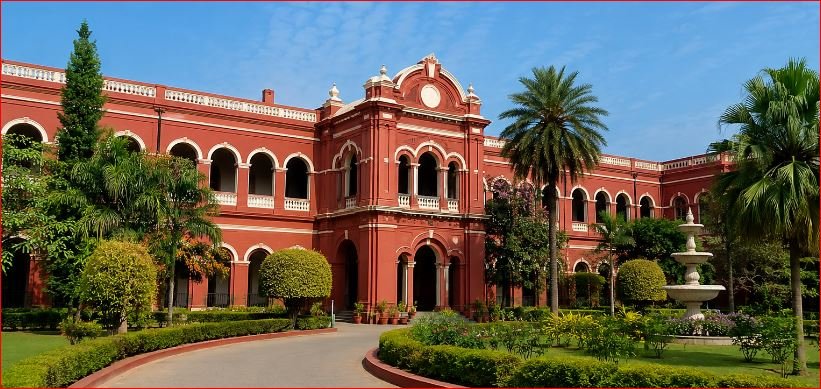
Distance makes due diligence harder, so it matters more, not less, when you are applying from abroad. Before shortlisting a college, verify three things: NCISM recognition, teaching hospital infrastructure, and accreditation status.
Accreditation is often overlooked by NRI families simply because it is not visible from a website. Checking a college’s NAAC standing through a specialist like BGC’s NAAC accreditation consultancy resources can help you understand what a strong accreditation record actually indicates about teaching quality and infrastructure — not just a logo on a brochure.
Common Challenges NRI Students Face and How to Avoid Them
- Missing equivalence certification: get your foreign qualification evaluated early, not after applying.
- Underestimating NEET preparation time: NRI students often assume quota seats bypass NEET — most do not.
- Currency and payment timing: some colleges require full first-year fees before visa/travel confirmation, so plan cash flow ahead.
- Cultural and academic adjustment: hostel life and Indian classroom pace can be a shift; connect with current NRI students at the college before joining, if possible.
Career Outlook After BAMS for NRI Graduates
One advantage NRI students often have after graduation is dual familiarity — with both the Indian healthcare system and the country they grew up in. This makes the transition into an international career smoother. If working abroad after graduation is part of your plan, our detailed guide on Ayurveda jobs abroad for Indian graduates covers eligibility, visas, and country-wise opportunities in depth.
Graduates interested in research careers can also explore published work in indexed medical science journals covering Ayurveda to see the kind of research output that strengthens postgraduate and academic applications later.
Ready to explore your options? Check NRI Admission Process and get matched with NCISM-recognised colleges offering NRI quota seats.
Conclusion
BAMS admission for NRI students is more structured than most families expect — the seats exist, the process is documented, and the career outcomes on the other side are genuinely strong. The families who go through this smoothly are the ones who start early: confirm NEET eligibility, get equivalence certification sorted, and shortlist colleges based on accreditation, not just marketing. Get those three right, and the rest of the process is straightforward paperwork.
FAQs:
Yes, most NCISM-recognised colleges require NEET-UG even for NRI quota seats.
Typically 5% to 15% of total seats, depending on the college.
Often yes, but colleges may treat OCI as a separate category — confirm before applying.
Yes, NRI quota fees are usually higher and often payable in foreign currency.
Yes, if their qualifying exam was completed outside the Indian education system.
External Resources
- National Commission for Indian System of Medicine (NCISM)
- Ministry of AYUSH, Government of India
- Association of Indian Universities — Equivalence Division
Related Posts:

Best Physiotherapy Colleges in NCR

Abroad Nursing Jobs for Indian Nurses: Openings & How to Apply

MBA Colleges in Mumbai Without Entrance Exam: Direct Admission

How to Get Admission in Private Colleges Without Entrance Exam

Paramedical Courses List After 12th: Diploma, Degree and Certificate Options

Comments
[…] Forex Risk: Your principal and interest remain denominated in your chosen foreign currency throughout the tenure (1 to 5 […]