
Do you like science and want a hospital career without becoming a doctor? Then this guide is for you. Here, you will find clear OT technician course details in simple words. First, you will learn what the course is. Next, you will see eligibility, duration, subjects and admission steps. Finally, you will understand job scope and how to pick a good college.
Many students feel confused after Class 12. There are many names, many fees and many claims. Therefore, we have kept this guide practical. Read it once, and you can shortlist colleges with confidence. If you are still exploring options, you can also browse more career guides on BhavyaGyan.
What Is an OT Technician Course?
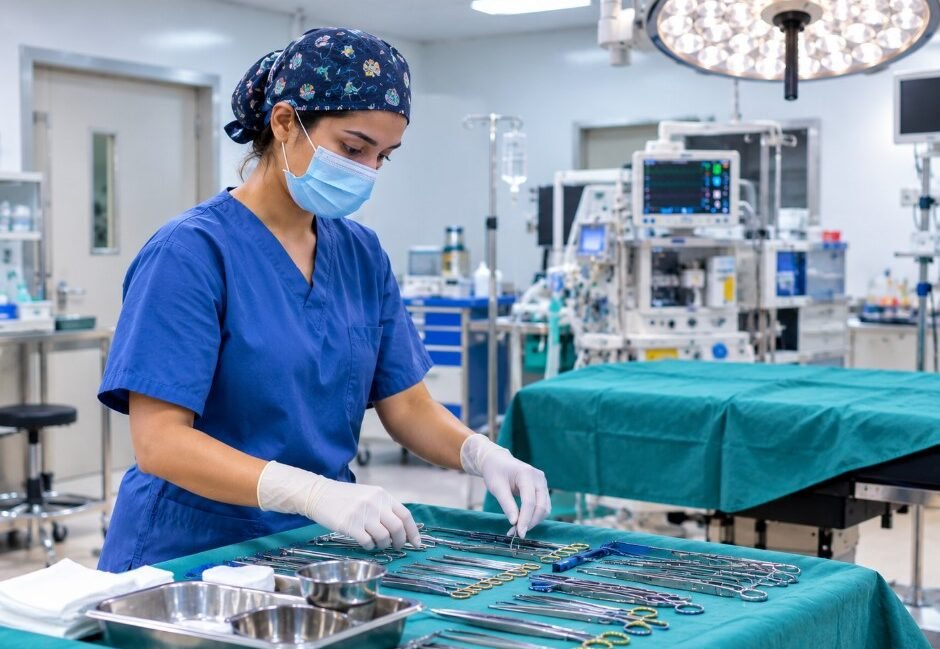
An OT technician course trains you to work inside the operation theatre. You learn how to prepare the theatre, handle surgical instruments and support the surgical team. In simple words, you become the person who keeps the OT ready, clean and safe.
You may also see it called an operation theatre technology course. Colleges use different names for the same field. So, always read the course title and the syllabus before you apply.
What Does an OT Technician Do?
- Set up the operation theatre before every surgery
- Sterilise and arrange surgical instruments
- Prepare and check equipment and monitors
- Assist the anaesthesia team and the surgeon
- Follow infection control rules during and after surgery
- Maintain records of instruments and supplies
Common Course Names You Will See
Under the national allied health framework, the degree is now often called Bachelor of Anaesthesia and Operation Theatre Technology (BAOTT). However, many colleges still use older names. For example, B.Sc OT Technology, B.Sc Anaesthesia Technology and Diploma in OT Technology are all common. As a result, two colleges may sell the same course under different titles.
OT Technician Course Details at a Glance
The table below gives a quick view. Please note that rules differ by university and state. Therefore, always confirm the final criteria on the official college prospectus.
| Level | Typical Duration | Basic Entry Requirement |
|---|---|---|
| Diploma in OT Technology | About 2 years | 10+2, usually with science (varies by institute) |
| B.Sc / BAOTT | 4 years (8 semesters), including internship | 10+2 with Physics, Chemistry and Biology, about 50% marks |
| M.Sc in Anaesthesia and OT Technology | Usually 2 years | Relevant B.Sc degree with about 50% marks, plus an institute test |
Notably, the degree route is now the main path. A typical four-year BAOTT program has three years of classroom and lab learning. After that, you complete one year of internship in a hospital.
OT Technician Eligibility: Who Can Apply?
Eligibility is the first filter. Let us look at it level by level. Because rules can change, treat this section as a guide and not a final rule.
Eligibility for the Bachelor’s Degree
Most colleges ask for 10+2 with Physics, Chemistry and Biology. In addition, many ask for around 50% aggregate marks. Some universities also hold an entrance test. For this reason, check each college’s admission notice early.
Eligibility for Diploma and Lateral Entry
A diploma is a shorter route. Moreover, it can lead to a degree later. According to national curriculum documents, a candidate with a two-year full-time diploma in this field from a recognised body can be eligible for lateral entry into the third semester of the degree. Even so, the candidate may need equivalence approval, so ask the college before you enroll.
Eligibility for M.Sc
For postgraduate study, you need a relevant B.Sc degree from a recognised university. Besides that, institutes often ask for 50% marks, internship proof and an entrance test.
Not sure if you qualify?
Check your marks and stream against real college criteria before you apply.
Syllabus: What Will You Study?
The syllabus mixes theory, lab work and hospital training. First, you build a base in basic medical science. Then, you move to surgical and anaesthesia subjects. Finally, you practise in a real OT during your internship.
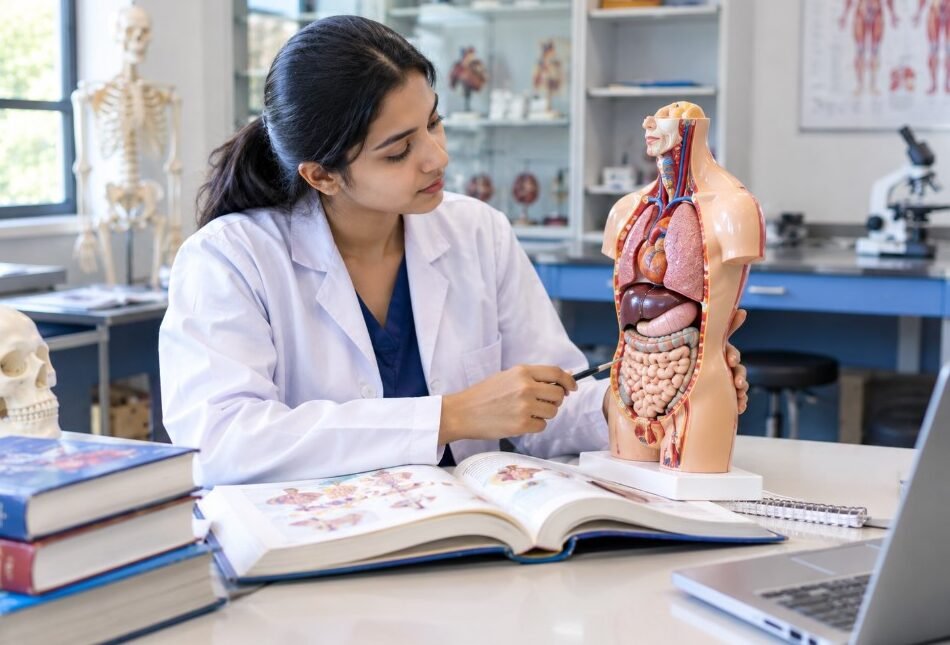
- Human anatomy and physiology
- Pharmacology and basic microbiology
- Sterilisation and infection control
- Surgical instruments and OT procedures
- Anaesthesia equipment and patient monitoring
- Basic life support and emergency care
- Patient safety, ethics and communication
- OT management and record keeping
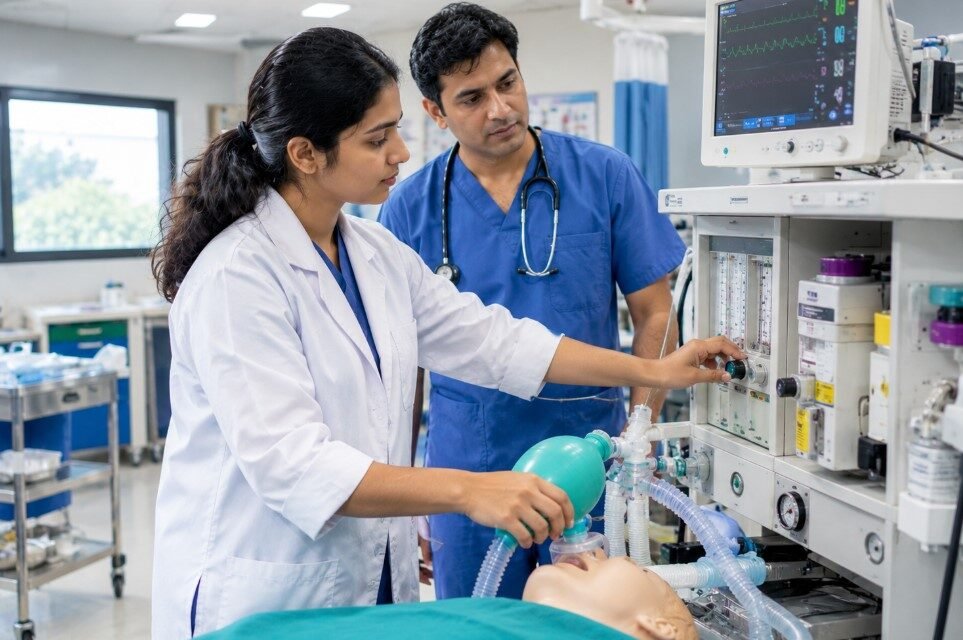
Importantly, practical exposure matters more than the subject list. A good program gives you early contact with operation theatres, ICUs and recovery rooms. Some postgraduate programs even include simulation labs with anaesthesia machines and monitors.
Admission Process and Fees
The admission steps are simple. However, dates differ across colleges. In general, follow this order:
- Check eligibility for your target course
- Shortlist recognised colleges and universities
- Fill the application form before the deadline
- Appear for the entrance test or counselling, if required
- Submit documents and pay the first fee installment
Fees vary widely. For example, one university lists tuition of around ₹30,000 per semester for its BAOTT program. Private colleges in big cities may charge more. Therefore, always ask for a full fee list that includes hostel, exam and internship charges. For more help with timelines and applications, read our admission guides on Mantech Publications.
How to Choose the Right OT Technician College
A good college shapes your first job. So, do not choose only by fee or by advertising. Use this checklist instead.
Check Recognition and Curriculum
Confirm that the university is recognised. Also, ask whether the syllabus follows the national allied health curriculum. This protects your degree value later. For a sample of how we present college lists city by city, see top physiotherapy colleges in Indore.
Check Hospital Tie-Ups and Internship
Ask where students do their internship. A college with its own teaching hospital or strong tie-ups gives you more hands-on cases. In contrast, a college with no clinical partner will leave you with weak practice.
Check Quality Systems
Strong institutes track teaching quality and student results. Many follow structured quality processes, such as IQAC, and apply for NAAC accreditation. To understand how colleges prepare for this, see the resources for colleges on Bhavya Gyan Academy. You can also read college guides on Mantech Publications.
Check Faculty and Labs
Visit the campus if you can. See the OT simulation lab, the sterilisation unit and the library. Meet a senior student and ask honest questions.
Ready to compare colleges?
See shortlisted institutes, fees and admission details in one place.
OT Technician Career Scope in India
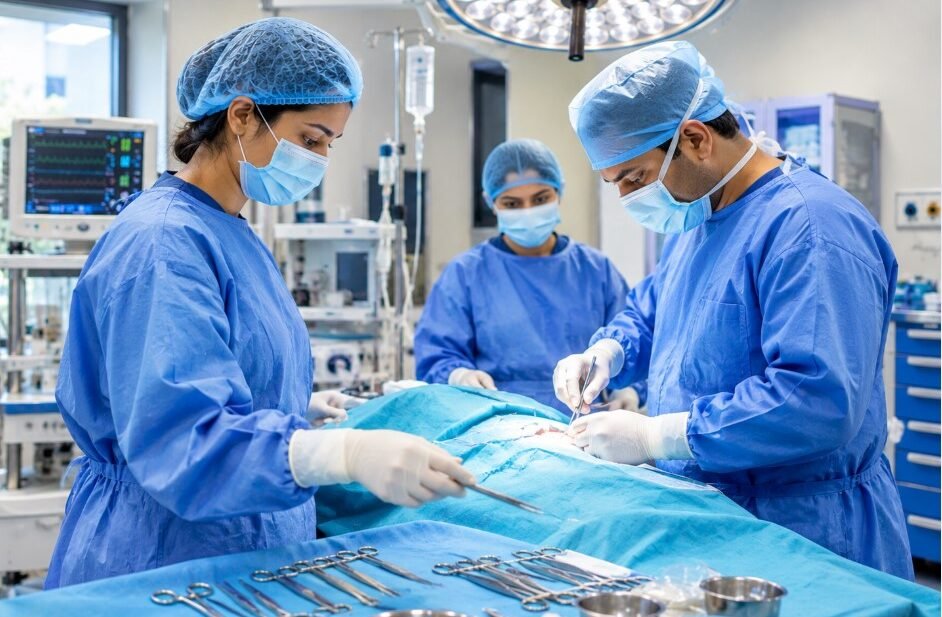
Now let us talk about jobs. The OT technician career scope is steady because surgeries happen every day. Hospitals need trained staff to run theatres safely. As new surgical technology arrives, the need for skilled people also grows.
Job Roles After the Course
- Operation theatre technologist
- Anaesthesia technician
- Surgical assistant (OT assistant)
- OT in-charge or supervisor, after experience
- Medical device trainer or sales specialist
- Hospital quality and infection control staff
Where You Can Work
You can work in multispecialty hospitals, trauma centres, cardiac institutes, transplant units and critical care units. In addition, government hospitals, day-care surgery centres and private nursing homes hire OT staff. Some graduates also move into medical device companies.
Salary and Growth
Salary depends on the city, the hospital and your skill level. Freshers usually start modestly. However, pay improves with experience, special skills and senior roles. Therefore, check live job listings in your target city instead of relying on one number.
Higher Study and Research
After a B.Sc, you can pursue an M.Sc in Anaesthesia and OT Technology. Later, you can move into teaching, hospital management or research. If you plan to write about perioperative care, explore the medical science journals on Mantech Publications. Likewise, researchers can find guidance through research support services at BGC.
Want to compare this field with other health careers? Read about sports physiotherapy as a growing career path. In addition, these physiotherapy career guides show how other allied health students plan their future.
Diploma or Degree: Which Route Should You Pick?
This is a common question. Each route has clear pros and cons. So, think about your time, budget and long-term goals.
- Diploma: shorter, lower cost and faster entry into a job
- Degree: longer, but it gives wider roles and a clearer path to M.Sc
- Diploma plus lateral entry: start early, then upgrade to a degree later
If you can afford four years, the degree is usually the stronger choice. It also fits the new national framework. However, if you need to earn sooner, a diploma can be a smart first step. Just make sure the diploma is recognised, so that you can claim lateral entry later.
Common Mistakes to Avoid
- Choosing a college only because the fee is low
- Skipping the check on recognition and affiliation
- Ignoring the quality of internship training
- Believing a 100% placement claim without proof
- Missing application deadlines and entrance dates
Each of these mistakes is easy to avoid. For example, you can ask the college for last year’s placement list. Similarly, you can call a former student and ask about internship hours. Small checks like these save both money and time.
Skills That Help You Succeed
Marks alone will not make you a good OT technician. Instead, you need practical habits. First, you must stay calm under pressure. Second, you must pay close attention to detail. Third, you must work well in a team. Lastly, you must follow hygiene rules every single time. If these traits sound like you, this course may be a strong fit.
You can build these skills during the course. For instance, join lab practice sessions and ask seniors for feedback. In addition, learn the names and uses of common surgical instruments early. Over time, this habit makes you faster, safer and more confident on the job. Employers notice such students quickly during internships.
Is This Course Right for You?

Choose this course if you like hands-on work and want a clear hospital role. On the other hand, think twice if you dislike long standing hours or are uncomfortable around surgery. Also compare it with similar options, such as lab or physiotherapy courses, before you decide. You can learn more about the wider field of medical and allied health courses to see all your choices.
To learn who we are and how we support students and institutions, visit BGC’s about page.
Take the next step today?
Do not leave your course choice to chance. Compare colleges, check eligibility and plan your admission.
Conclusion
To sum up, the OT technician course is a practical path into healthcare. It needs a science background, steady focus and good hands-on training. Check eligibility first. Then compare recognised colleges, internship quality and fees. With the right choice, you can build a stable and respected hospital career.
Start your shortlist now
Explore verified options and move closer to your admission.
FAQs:
A diploma takes about two years. The degree usually takes four years, including a one-year internship.
Most degree colleges ask for 10+2 with Physics, Chemistry and Biology, around 50% marks.
Degree courses need a science stream. Some diploma programs may differ, so confirm with the institute.
Yes. Hospitals need trained OT staff daily, and roles grow with experience and further study.
Some universities hold one. Others admit on merit. Always check the college’s admission notice.
Yes. You can pursue an M.Sc in anaesthesia and OT technology, or move into teaching and management.
External Resources
- Competency-based BAOTT curriculum (NCAHP-aligned), Nagaland University
- B.Sc Anaesthesia and OT Technology program, D. Y. Patil School of Allied Health Sciences
- B.AOTT program details, L. P. Patel Institute, Bhaikaka University
- M.Sc Anaesthesia and OT Technology, Manipal
- Ministry of Health and Family Welfare, Government of India
Comments