
Ten years ago, most Indian physiotherapy graduates barely considered sports as a specialization. Today, a sports physiotherapy career is one of the fastest-growing paths within the field, driven by professional leagues, a booming fitness industry, and a national push toward athletic performance. What used to be a niche interest has become a genuine, well-paying career track with its own structured entry routes.
This guide looks at why the field is expanding so quickly, the two realistic routes into it, and the skills that separate a sports physiotherapist from a general one. For specific job roles and salary figures, BhavyaGyan’s Sports & Fitness Physiotherapy Jobs guide covers that in detail.
Why Sports Physiotherapy Is Growing So Fast Right Now
Several trends are converging to push demand for sports physiotherapists higher than ever. Professional leagues across cricket, football, kabaddi, and badminton now run full-time medical and rehabilitation staff, not just occasional consultants. Government initiatives like Khelo India and the Target Olympic Podium Scheme (TOPS) have significantly expanded athlete support infrastructure, including dedicated sports science and rehabilitation teams.
At the same time, India’s fitness industry has grown well beyond gyms into structured training academies, marathon culture, and corporate wellness programs — all of which need injury prevention and recovery expertise. This combination of elite sports investment and mass fitness culture is what makes sports physiotherapy a genuinely growing career path, not just a niche interest.
School and college-level sports are also professionalising faster than before, with more institutions hiring dedicated physiotherapy support for their teams year-round rather than only during tournament season. That shift alone has quietly created a meaningful number of stable, entry-friendly roles.
What Does a Sports Physiotherapist Actually Do?
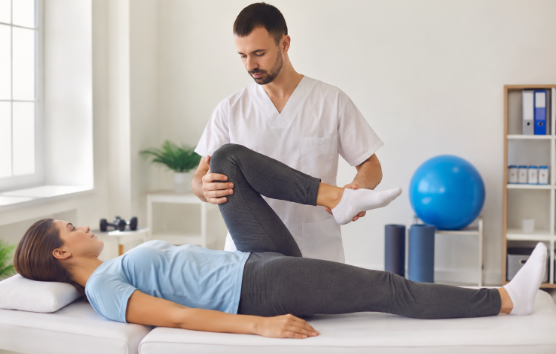
A sports physiotherapist focuses specifically on injury prevention, on-field emergency response, and performance-linked rehabilitation for athletes and active individuals. Unlike general physiotherapy, the work often happens outside a clinic — on a training ground, in a locker room, or courtside during a match.
The goal isn’t just recovery; it’s getting an athlete back to peak performance safely, often under real time pressure from coaches and competition schedules. This blend of clinical judgment and performance awareness is what makes the specialization distinct from general rehabilitation work, and it’s also why the training path looks a little different too.
Two Ways to Enter a Sports Physiotherapy Career
Route 1: BPT + Sports Physiotherapy Certifications
After a BPT degree, you can build sports-specific expertise through short certifications in taping techniques, sports massage, or strength and conditioning, then gain experience through internships with academies or fitness centres. This route gets you working sooner, though your scope may stay limited without a specialised postgraduate qualification, especially for roles with elite-level teams.
Route 2: BPT + MPT in Sports Physiotherapy
A dedicated postgraduate specialization gives you deeper clinical training in biomechanics, exercise physiology, and advanced rehabilitation protocols — and it’s usually the stronger route into roles with professional teams. It also tends to command a better starting salary and opens doors to consultant-level positions faster. BhavyaGyan’s MPT Sports Physiotherapy course guide covers eligibility, duration, and syllabus for this path in full.
Weighing certifications against a full MPT specialization?
Skills That Set Sports Physiotherapists Apart
Clinical knowledge alone isn’t enough in this specialization. The physiotherapists who thrive tend to build a specific mix of skills:
- Strong grounding in biomechanics and movement analysis
- Taping and manual therapy techniques specific to sports injuries
- Basic sports psychology, to support athletes through injury setbacks mentally
- On-field emergency response and quick decision-making under pressure
- Comfort working alongside coaches, trainers, and sports scientists as a team
These skills rarely come from classroom learning alone — they’re built through supervised fieldwork, internships, and repeated exposure to real training environments. A student who spends weekends volunteering at local matches often develops sharper on-field instincts than one who only studies the theory.
Where Sports Physiotherapists Actually Work
Sports physiotherapy roles span a wider range of settings than most students initially expect:
| Setting | Example Employers | Nature of Work |
| Professional teams | Cricket, football, kabaddi franchises | Full-time, high-intensity, travel involved |
| Sports academies | Khelo India centres, private academies | Structured training and injury prevention |
| Fitness chains | Gyms, CrossFit studios, wellness centres | Client-focused, flexible scheduling |
| Corporate wellness | IT parks, large offices | Preventive care, ergonomic assessments |
| Private sports clinics | Independent or partnership clinics | Mixed athlete and general clientele |
For a closer look at specific job titles, expected salaries, and how to apply for each of these, see BhavyaGyan’s Sports & Fitness Physiotherapy Jobs guide.
Curious what a day working with a professional sports team actually looks like?
Building Toward a Career With a Professional Sports Team
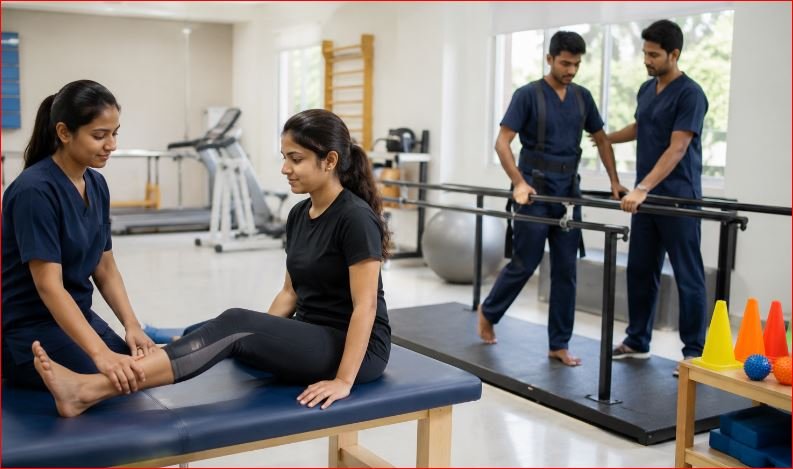
Landing a role with a professional team rarely happens straight out of college. Most sports physiotherapists build toward it through a sequence: internships with academies or college sports teams during study, short-term work with fitness centres or semi-professional clubs after graduation, and networking through sports medicine conferences and continuing education workshops.
Volunteering at marathons, local tournaments, or school sports events is also a practical, low-pressure way to gain on-field experience early — and it’s often how coaches and team doctors first notice promising young physiotherapists.
Is Sports Physiotherapy Right for You?
This specialization tends to suit people who:
- Enjoy fast-paced, sometimes unpredictable work environments
- Have a genuine interest in sports and athletic performance, not just rehabilitation
- Are comfortable working outside a traditional clinic setting
- Want to combine clinical skill with ongoing physical fitness themselves
If steady clinic hours and a predictable routine matter more to you than variety and pace, general or hospital-based physiotherapy may be a better long-term fit — and that’s a perfectly valid choice too.
Sports physiotherapists interested in publishing research on athletic rehabilitation or sports science can also explore peer-reviewed health and allied-science journals from Mantech Publications as a credible outlet for academic work.
Choosing a College That Actually Builds This Career
Not every physiotherapy college offers genuine sports-specific exposure. Look for colleges with active sports team tie-ups, not just a mention of “sports physiotherapy” in the brochure. It’s also worth checking whether the parent institution holds valid NAAC accreditation — Bhavya Gyan Consultants’ overview of NAAC accreditation explains what that status actually verifies, in simple terms.
Want to compare this path against general physiotherapy careers first?
Conclusion
Sports physiotherapy has moved from a niche specialization to a genuinely growing career path, driven by professional sports investment and a booming fitness culture. Whether you choose the faster certification route or a full MPT specialization, building real on-field experience early is what actually opens doors with teams and academies. Start with internships, stay consistent about building hands-on exposure, and let your interest in sports guide the specialization — not just the salary potential.
FAQs:
Yes, demand is rising fast due to professional sports and fitness industry growth.
Not always, but MPT specialization strengthens roles with professional teams.
BPT plus short certifications and academy or club internships.
Often yes, especially with professional teams or corporate wellness roles.
Rarely directly; most build experience through academies and internships first.
External Resources
- Sports Authority of India (SAI)
- Indian Association of Physiotherapists (IAP)
- National Commission for Allied and Healthcare Professions (NCAHP)
- Mantech Publications — Health & Allied Science Journals
Comments