
Many paramedical graduates in India ask the same thing. Can I really build a career overseas, and where do I begin? The answer is yes, but only if you follow the right order. Paramedical jobs abroad for Indian graduates depend on three things: a recognised qualification, a valid licence in the destination country, and a visa backed by a real employer.
This guide is built for action. It shows which roles travel best, how licensing works, how the paramedical visa process runs, and how to avoid fake agents. If you want a broader view of salaries and countries first, read our main page on abroad paramedical jobs. Then come back here to plan your steps.
Who Should Read This Guide
This guide is for three groups. First, DMLT, BMLT and BSc MLT graduates who want lab technician jobs overseas. Second, radiography, OT, dialysis and emergency care graduates who want hospital roles in other countries. Third, paramedical college heads and placement cells who want to prepare students for an international paramedical career. Each group gets a clear path below.
Why Employers Abroad Hire Trained Paramedical Staff
Many countries have ageing populations and growing hospital networks. That raises the need for lab, imaging and theatre staff. Employers look for people who can work safely, follow protocols and use modern equipment. Indian graduates often bring strong practical training and wide case exposure. But employers still need proof. That proof comes from licences, verified documents and clear clinical records. Your job is to build that proof step by step.
Which Paramedical Roles Travel Best

Not every paramedical role moves easily across borders. Roles with clear licensing rules and steady hiring are easier to plan. Here are the strongest options.
Medical Laboratory Technologists
Lab roles are the most common target. Hospitals and diagnostic chains need people who run blood, urine and tissue tests. Lab technician jobs overseas often need a degree, not just a diploma, because many regulators ask for a bachelor-level qualification. If you hold a BSc MLT or BMLT, you start with a clear advantage. If you are still weighing home options, compare them with medical laboratory jobs in India before you decide.
Radiographers and Imaging Technologists
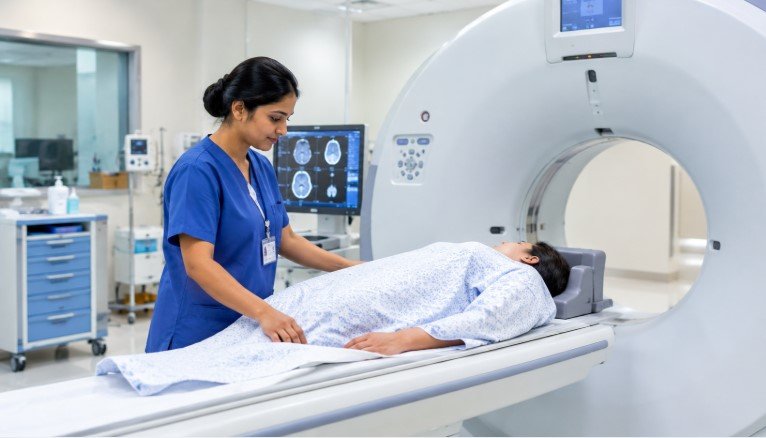
X-ray, CT, MRI and ultrasound staff are in steady demand. Many countries regulate this role closely. That means the paperwork is heavier, but the career path is also clearer. You can read role details on our radiology and imaging jobs page.
OT, Dialysis and Emergency Care Technicians
These roles are in demand, especially in the Gulf and in private hospital groups. Rules differ a lot by country. Some places license them. Others hire based on experience and a skills test. Our guide to paramedical job roles explains what each role does, so you can match your training to the right target.
Quick View: Where to Start by Role
| Your role | Common licensing path | Good first targets |
|---|---|---|
| Lab technologist (BMLT, BSc MLT) | Degree check and HCPC in the UK; CSMLS in Canada; DataFlow plus licensing exam in the Gulf | UK, Gulf, Canada |
| Radiographer / imaging | HCPC in the UK; AHPRA in Australia; health authority plus DataFlow in the Gulf | UK, Australia, Gulf |
| OT, dialysis, emergency tech | Gulf health authority and DataFlow; employer skills test | Gulf countries |
Step 1: Check That Your Qualification Is Strong Enough
Start with your certificate, not your passport. Regulators in many countries compare your course length, subjects and clinical hours with their own standards. A two-year diploma and a four-year degree are not treated the same way.
If you hold only a diploma, check whether the destination country accepts it for your role. If it does not, a bachelor-level route may be worth the time. Review the options for a diploma in paramedical and for bachelor courses in paramedical before you plan your next move.
Also confirm that your college and course are recognised in India. If you are still choosing a college, use our list of top paramedical colleges in India to compare institutes.
Step 2: Clear Licensing and Registration
Licensing is the gate. Without it, most employers cannot hire you. Rules change often, so always confirm on the official regulator site before you pay any fee. Here is the usual pattern by region.
United Kingdom
Radiographers and biomedical scientists register with the HCPC through the international route. Lab professionals who want to work as biomedical scientists usually also need a degree assessment from the IBMS. Many NHS employers list roles on NHS Jobs.
Gulf Countries
The UAE, Saudi Arabia, Qatar and nearby countries usually ask for primary source verification of your documents through the DataFlow Group. Many also need a licensing exam, often taken through Prometric. Check each health authority, such as the Dubai Health Authority or the Saudi Commission for Health Specialties, for role-wise rules.
Australia and Canada
Australia regulates many health roles through AHPRA, and lab staff can also check with AIMS. In Canada, laboratory professionals can start with the CSMLS assessment. These routes take longer and may need bridging or supervised practice. Plan for months, not weeks.
Step 3: Prove Your English
Most regulators in the UK, Australia and Canada ask for an English test. The two common choices are IELTS and OET. UK regulators often ask for IELTS Academic 7.0 overall with no part below 6.5, but scores differ by role. Confirm the exact score with your regulator.
Book your test early. A low score can delay every other step. Gulf employers may be more flexible, yet good English still helps in interviews and daily work.
Understanding the Paramedical Visa Process

The paramedical visa process is usually employer-led. In most cases you need a job offer first. The employer or sponsor then starts your work visa. This is why licensing and job search come before the visa step.
The Typical Visa Sequence
- Get licence or eligibility approval from the regulator.
- Apply to employers and clear interviews, often online.
- Receive a written job offer and contract.
- Your employer or sponsor starts the work visa file.
- Complete medical tests, police clearance and biometrics.
- Receive your visa, then book travel.
For the UK, the official page on the Health and Care Worker visa lists who can apply and which roles qualify. Not every paramedical job is on the list, so check your exact role.
Documents to Keep Ready
- Passport with long validity
- Degree, mark sheets and internship certificates
- Council or professional registration
- Experience letters on company letterhead
- English test score report
- Police clearance certificate
- Passport photos and an updated CV
Keep both scanned and printed copies. Name spellings must match across every document. A small mismatch can slow verification by weeks.
Emigration Clearance in India
Some Indian passport holders need emigration clearance before travel. Check your own status on the government eMigrate portal, and use only recruiters who appear there as registered. Many graduates do not need clearance, but verify your passport category before you book tickets.
Ready to compare roles and countries?
Find Real Employers and Avoid Scams

Fake offers are a real risk. Follow these rules to stay safe.
- Never pay anyone for a “guaranteed visa” or “guaranteed job”.
- Ask for the employer name, licence details and contract in writing.
- Check recruiters against the government eMigrate list.
- Apply through hospital career pages and official job boards where possible.
- Do not hand over original certificates before you see a verified offer.
Ethical employers do not ask for large upfront fees. If someone does, pause and verify before you move forward.
Build a Profile That Employers Trust
Licensing gets you into the candidate pool. Your profile gets you the interview. Keep your CV to one or two pages. List the tests and machines you have used, and show your clinical hours clearly. Strong document and digital skills also help, because many hospitals use electronic records and online interviews. A short course like Office Automation from Bhavya Gyan Academy builds document, spreadsheet and interview skills that suit these tasks.
If you have worked on lab quality projects, audits or case studies, think about publishing them. Published work strengthens applications for senior and teaching roles abroad. You can explore medical science journals from Mantech Publications for research visibility, and get structured support through its research paper assistance services.
Need one-to-one guidance?
For Paramedical Colleges: Build an Overseas Pathway
Colleges play a big role too. Students trust institutes that show clear outcomes. A college that tracks placements, aligns its syllabus with international standards and keeps clean records is easier for regulators and employers to assess.
Placement cells can take four practical steps. Map the syllabus to common international competencies. Keep clinical logbooks verified and signed. Build links with licensed overseas recruiters. Run English test preparation on campus. For structured quality systems and global benchmarking, see the international accreditation services from Bhavya Gyan Consultants. Colleges that want more student visibility can also list their institute on BhavyaGyan.
Planning global readiness for your institute?
Common Mistakes That Delay Your Application
Most delays come from small errors, not big problems. Avoid these common ones.
- Applying to employers before you know the licensing rules for that country.
- Using different name spellings across passport, degree and experience letters.
- Booking the English test too late and missing registration windows.
- Paying an agent before checking who they really work for.
- Ignoring experience requirements and applying with no clinical record.
- Sending the same CV to every country without changing the format.
Fix these early and you save weeks. A calm, step-by-step approach beats a rushed one every time.
Long-Term Growth in an International Paramedical Career

Your first job abroad is a starting point. An international paramedical career can grow into senior technologist, supervisor, quality or training roles. Many professionals also add skills in a speciality such as molecular diagnostics, MRI or critical care support. If you plan to teach or lead later, a postgraduate qualification helps. Review the master courses in paramedical available in India so you can plan study alongside work. Keep learning, keep your registration current, and track continuing education points where your regulator asks for them.
Your 90-Day Action Plan
- Days 1 to 10: Choose one role and two target countries. Read each regulator’s official page.
- Days 11 to 25: Check qualification fit. Collect and scan all certificates.
- Days 26 to 50: Book and prepare for IELTS or OET. Start regulator or DataFlow applications.
- Days 51 to 75: Update your CV, set job alerts and apply to verified employers.
- Days 76 to 90: Prepare for interviews and licensing exams, and collect clearance documents.
Timelines vary by country. Some registrations take many months, so treat this as a starting frame and not a promise.
Still choosing your course?
Conclusion
Paramedical jobs abroad for Indian graduates are real, but they reward planning. Check your qualification, clear licensing, prove your English, and let a verified employer lead the visa step. Avoid shortcuts and fake promises. Start with one role and two countries, follow the 90-day plan, and build from there.
FAQs:
Sometimes. Many countries prefer degrees, so check your regulator’s rules for your exact role.
Often yes. Many employers ask for one to three years, though entry-level routes exist in some countries.
Usually DataFlow verification plus a licensing exam such as Prometric, depending on the health authority.
It varies by country, from a few weeks to many months, after licensing and a job offer.
Some Gulf roles may accept diplomas with experience. The UK, Canada and Australia usually prefer degrees.
They ask for upfront fees, promise guaranteed visas, or are missing from the eMigrate list.
External Resources
- HCPC international registration
- IBMS degree assessment for HCPC registration
- NHS Jobs
- UK Health and Care Worker visa
- DataFlow Group
Related Posts:

BSMS Course 2026: Admission, Fees, Eligibility, Scope & Salary

MPT Orthopedic Physiotherapy: Course, Scope, Salary & Career

B.Tech in Construction Engineering: Course Details, Eligibility, Scope & Salary

BSc Agriculture Course 2026: Complete Guide to Admission, Syllabus, Scope & Career

B.Tech in Water Resources Engineering: Course Details, Eligibility, Scope & Career Opportunities

Comments