
You have finished your BPT. Now a big question is waiting. Which postgraduate path should you take? MPT specializations shape your skills, your job options, and even your daily work. Therefore, this choice deserves time and care.
This guide explains each option in simple words. First, you will learn how a master’s course is structured. Next, you will see who can apply. After that, we compare every major branch. You can also explore more physiotherapy career guides on BhavyaGyan as you read.
What Is an MPT Degree?
MPT stands for Master of Physiotherapy. It is a postgraduate degree for BPT graduates. The course builds advanced clinical skills in one focus area. It also adds training in research methods and teaching.
In other words, BPT teaches you the basics of physiotherapy. MPT makes you an expert in one branch. As a result, you can treat complex cases, lead a team, or teach students.
Many students ask whether MPT is worth the effort. In most cases, yes. Specialists often get better clinical roles and faculty posts. Besides, hospitals and sports teams look for focused skills. To see the wider picture, read about physiotherapy career options in India.
Why Your Specialization Matters
Your branch decides the patients you treat, the skills you build, and the jobs you can apply for. For example, a neurology graduate and a sports graduate may both hold an MPT. Yet their daily work looks very different.
Moreover, employers often hire by branch. A hospital may want a cardiopulmonary expert for its ICU. A sports academy, on the other hand, will look for someone with injury management skills. Hence, choose your focus early and plan your learning around it.
Master of Physiotherapy Courses: Duration and Structure

Most master of physiotherapy courses run for two years. That means four semesters. However, the exact structure depends on the university. So always check the official prospectus before you apply.
A typical course has these parts:
- Theory classes on advanced anatomy, biomechanics, and evidence-based practice.
- Clinical training in hospitals, rehab centres, or sports clinics.
- Research work that includes a dissertation or thesis.
- Teaching practice in some universities, which prepares you for faculty roles.
Clinical hours matter a lot. For example, a neurology student spends many hours with stroke and spinal cord patients. Meanwhile, a sports student works with athletes and trainers. Hence, the branch you choose decides your daily learning.
MPT Eligibility: Who Can Apply?
MPT eligibility is fairly simple. However, rules differ between universities and states. Here are the common requirements:
- A BPT degree from a recognised university.
- A minimum percentage in BPT, often around 50 percent. Some colleges set a different cut-off.
- Completion of the compulsory internship.
- Registration with the relevant state or national council, where required.
- A pass in the entrance exam, if the university conducts one.
Some universities admit students through entrance tests. Others use merit lists. In addition, a few offer management or institutional quota seats. Therefore, read each notice closely. Also, keep your marksheets, internship certificate, and registration papers ready.
Rules for allied health courses are also guided by national regulators. You can read the official updates on the National Commission for Allied and Healthcare Professions website.
Not sure which branch suits you?
Compare MPT options, career paths, and admission tips in one place.
Core MPT Specializations Explained
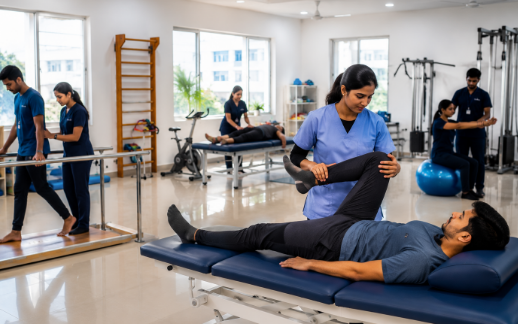
Now let us look at the main MPT specializations. Every college does not offer every branch. Even so, the following areas are the most common in India.
1. Musculoskeletal and Orthopedic Physiotherapy
This branch deals with bones, joints, muscles, and ligaments. You will treat fractures, arthritis, back pain, and post-surgery cases. Because these conditions are common, demand stays steady.
Skills include manual therapy, exercise prescription, and joint mobilisation. As a result, graduates often work in orthopedic hospitals, private clinics, and rehab centres. Many also start their own practice.
2. Neurological Physiotherapy
Neurology focuses on the brain, spinal cord, and nerves. Patients may have stroke, Parkinson’s disease, cerebral palsy, or spinal injury. The work needs patience and strong assessment skills.
Recovery is often slow. However, small gains change lives. Therefore, this branch suits students who enjoy long-term patient care. Graduates work in neuro-rehab units, multispecialty hospitals, and research centres.
3. Cardiopulmonary Physiotherapy
This area covers the heart and lungs. You will help patients after cardiac surgery, and those with COPD, asthma, or breathing problems. Intensive care units also need these specialists.
Moreover, awareness of lung health keeps rising. As a result, hospitals value trained cardiopulmonary physiotherapists. The field also fits students who like critical care settings.
4. Sports Physiotherapy
Sports physiotherapy focuses on injury prevention, treatment, and return to play. You may work with athletes, gyms, academies, or sports teams. Taping, strength training, and performance testing are key skills.
The field is growing quickly. For a deeper look, read this guide on sports physiotherapy as a growing career path. It explains roles, skills, and training routes in detail.
5. Pediatric Physiotherapy
Here you work with infants, children, and teenagers. Common cases include developmental delay, cerebral palsy, and congenital conditions. Parents are part of the treatment team, so communication skills matter.
This branch is rewarding but emotionally demanding. Still, many therapists find it deeply satisfying. Jobs exist in child development centres, special schools, and hospitals.
6. Community and Geriatric Physiotherapy
Community physiotherapy focuses on public health, prevention, and rehabilitation at home or in the field. Geriatric care deals with age-related conditions such as balance loss and osteoporosis.
Because India’s elderly population is growing, this area has long-term scope. Also, it suits students interested in health programmes, NGOs, and home care.
7. Women’s Health Physiotherapy
This branch covers pregnancy, postnatal recovery, pelvic floor problems, and related conditions. It is still a developing field in India. However, awareness is rising. Consequently, trained specialists can build a niche practice.
8. Other Physiotherapy Specialization Options
Some universities also offer hand rehabilitation, manual therapy, or physiotherapy in oncology and critical care. These are narrower options. Nevertheless, they can be strong choices if a nearby hospital offers matching clinical exposure.
Interested in sports rehab?
Learn how sports physiotherapy works and what skills employers expect.
How to Compare Physiotherapy Specialization Options

Picking a branch can feel confusing. So use a simple framework. Ask yourself these questions:
- What do I enjoy? Do you like fast clinical work, or slow rehab with long follow-up?
- Where do I want to work? Hospital, sports club, school, or your own clinic?
- What is the local demand? Check job ads in your city and nearby states.
- What is the college strength? A branch is only as good as its clinical exposure.
- Do I want to teach? If yes, choose a branch with strong research and faculty support.
Next, talk to seniors and working specialists. Ask about daily routines, income range, and growth. Furthermore, visit the clinical department if you can. A short visit often reveals more than a brochure.
Also avoid one common trap. Do not choose a branch only because it is trending. Instead, match it to your strengths. Over time, genuine interest builds better skills and better income.
How to Apply for MPT: Step by Step
The admission process is easier when you plan ahead. Follow these steps:
- Shortlist branches that match your interest and local demand.
- Check eligibility for each university, including minimum marks and internship rules.
- Track notification dates on official university and state websites.
- Prepare for the entrance exam, if the university conducts one.
- Arrange documents such as marksheets, internship certificate, ID proof, and photographs.
- Apply and attend counselling, then confirm your seat within the deadline.
Start at least four to six months before the usual admission season. That gives you enough time to compare options and fix any paperwork issues. Besides, early applicants often get a wider choice of seats and branches.
Choosing the Right College for Your MPT

The right college matters as much as the right branch. First, check recognition and approvals. Then look at faculty qualifications, patient load, and lab facilities. In addition, ask about thesis guidance and publication support.
Location also plays a role. Cities with large hospitals give more clinical exposure. To start your search, see these city guides on top physiotherapy colleges in Indore, Nagpur, Aurangabad, and Muzaffarpur.
Quality systems are another useful signal. Institutions that follow structured accreditation and internal review usually keep better academic standards. Colleges can learn how to build these systems through IQAC and quality support for colleges from Bhavya Gyan Academy.
Shortlisting colleges?
Start with our city-wise lists of physiotherapy colleges and compare facilities.
Research and Thesis in MPT
Every MPT student completes a dissertation. It usually involves choosing a topic, collecting data, and writing a report. Many students find this stage stressful. However, good planning makes it manageable.
Here are a few practical tips:
- Pick a narrow, clinical topic that you can test within your college.
- Finalise your guide and ethics approval early.
- Keep clean patient data and written consent forms.
- Read recent studies in your branch from reliable medical science journals.
- Avoid shortcuts and fake publishers. Learn how to spot predatory journals before you submit.
If you want to publish your work, choose a peer-reviewed journal with proper indexing. Authors can also explore paper publication services at Mantech Publications. Moreover, structured research paper assistance can help with formatting and journal selection.
If you need help with study design, data analysis, or writing, expert thesis and research support services from BGC Global can guide you step by step.
Need help with your MPT thesis?
Get expert guidance on topic selection, data analysis, and manuscript writing.
Career Paths After MPT
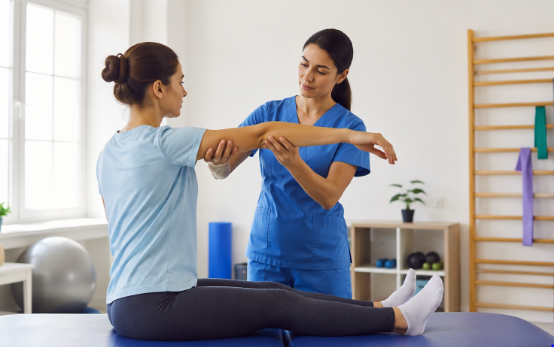
After your degree, several paths open up. Some are clinical. Others are academic or entrepreneurial.
- Clinical specialist in a hospital or rehab centre.
- Assistant professor in a physiotherapy college.
- Sports physiotherapist with clubs, academies, or fitness brands.
- Private practitioner running your own clinic.
- Researcher in universities or healthcare organisations.
- PhD candidate for those who want a top academic role.
Teaching roles usually need an MPT plus a good research record. So publishing early gives you a real edge. Similarly, private practice needs strong clinical reputation and patient trust. Therefore, build both skills and visibility from year one.
Salaries vary by city, branch, and experience. For that reason, avoid trusting a single number. Instead, check current job listings and talk to professionals in your target field.
Common Mistakes to Avoid
- Choosing a branch only because friends chose it.
- Ignoring clinical exposure and checking only the fee.
- Skipping recognition and approval checks.
- Starting the thesis too late.
- Publishing in low-quality journals.
- Not planning career goals before admission.
Each mistake is easy to avoid. All you need is early research and honest self-assessment.
Conclusion
MPT specializations offer many paths, but no single branch is best for everyone. Start with your interests. Then check eligibility, college quality, and local demand. Finally, plan your thesis early and publish in trusted journals.
FAQs:
A BPT graduate from a recognised university, usually with about 50 percent marks and a completed internship.
Most MPT courses run for two years, divided into four semesters.
Scope depends on demand and interest. Orthopedics, neurology, sports, and cardiopulmonary are popular choices.
It depends on the university. Some conduct entrance tests, while others admit through merit.
Yes. An MPT with research experience can lead to assistant professor roles in colleges.
Yes. Many specialists start private practice after gaining clinical experience and building patient trust.
External Resources
- National Commission for Allied and Healthcare Professions (NCAHP)
- World Physiotherapy – global standards and education resources
- Indian Association of Physiotherapists
- University Grants Commission (UGC)
- NIRF – National Institutional Ranking Framework
Comments